

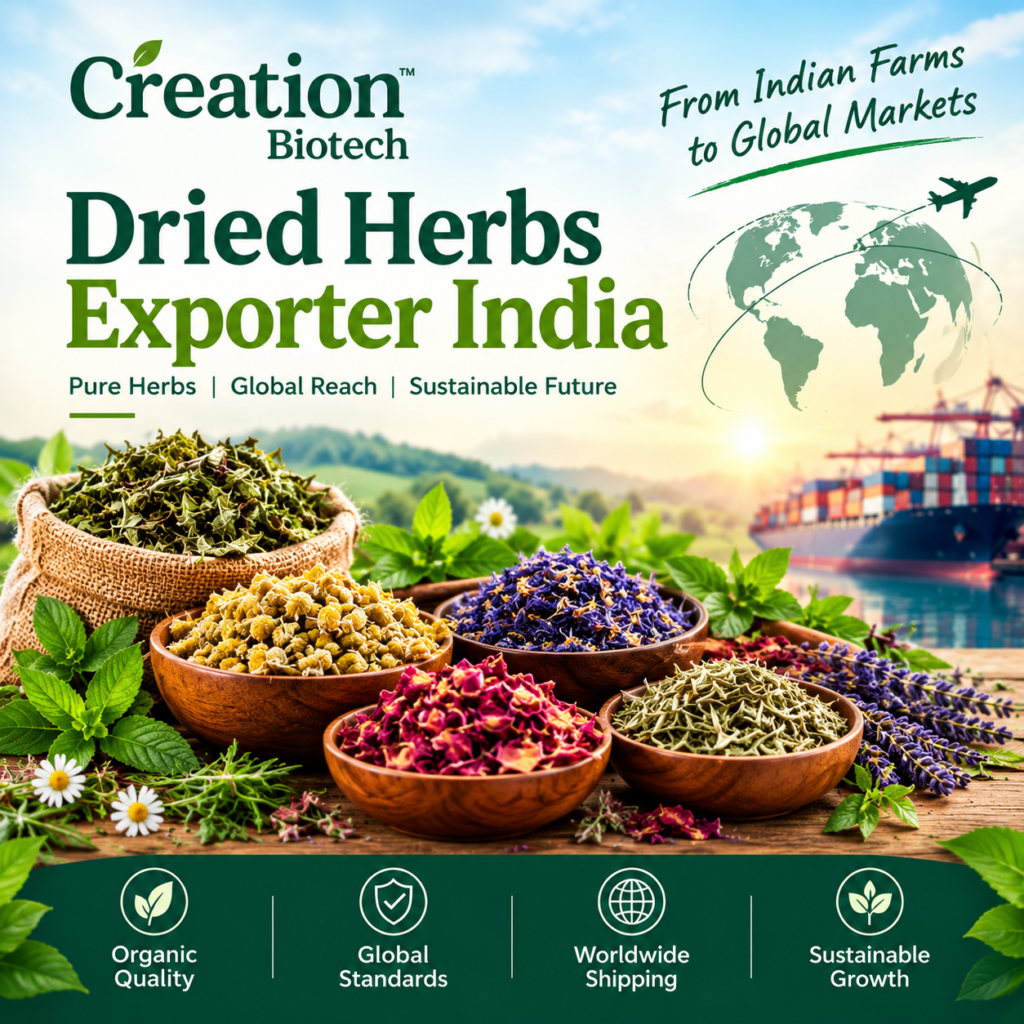
India as a Source of Dried Herbs for Global Markets
India is an important sourcing destination for dried herbs and botanical ingredients because of its diverse agricultural climate, traditional cultivation practices and established agricultural supply chains. International buyers source dried herbs for use in herbal teas, food products, botanical preparations, cosmetics and other manufacturing applications.
For businesses looking for a reliable dried herbs exporter in India, selecting the right supplier involves more than comparing prices. Buyers need to evaluate product specifications, botanical identity, cleanliness, moisture levels, packaging, traceability and the documentation required for their destination market.
Creation Biotech is an Indian supplier of organic and natural agricultural ingredients, including a range of dried herbs and botanical products. Based in Bareilly, Uttar Pradesh, the company works with farming communities and offers products for businesses seeking agricultural ingredients for domestic and international markets.
What Are Dried Herbs?
Dried herbs are leaves, flowers, roots, stems or other suitable plant parts that have been dried to reduce moisture and support storage, handling and transportation.
The drying method and final product specifications depend on the botanical species, intended application and buyer requirements. Proper harvesting, drying, sorting and storage are important for maintaining the product’s appearance, aroma and overall quality.
Commonly traded dried botanical ingredients include chamomile flowers, hibiscus petals, rose petals, blue cornflower, moringa leaves, curry leaves and ashwagandha roots.
Buyers should confirm the botanical name, plant part, grade and intended use before placing a bulk order. These details help prevent confusion between products with similar common names.
Which Dried Herbs Can Buyers Source from India?
India offers a diverse range of dried botanical ingredients for commercial applications. Availability, certification status and specifications should be confirmed for each product.
1. Dried Chamomile Flowers
Dried chamomile flowers are commonly used in herbal tea blends, botanical preparations and selected cosmetic formulations. Buyers may request details about flower appearance, foreign matter, moisture specifications, aroma and microbiological requirements.
2. Dried Hibiscus Sabdariffa Petals
Hibiscus sabdariffa is valued for its characteristic colour and tart flavour. Dried hibiscus petals are used in herbal infusions, beverage blends and food applications, subject to applicable regulations and product specifications.
3. Dried Blue Cornflower
Blue cornflower petals are used in decorative tea blends, botanical products and selected cosmetic applications. Colour retention, petal integrity and cleanliness are important considerations when evaluating a supplier.
4. Dried Rose Petals
Dried rose petals are used in tea blends, botanical preparations, potpourri and cosmetic products. Buyers should specify the intended application because food-grade and non-food-grade requirements may differ.
5. Moringa Leaves
Dried moringa leaves are traded for food ingredient and botanical applications. Depending on the intended use, buyers may require testing for microbial contamination, pesticide residues and other relevant quality parameters.
6. Dried Ashwagandha Roots
Ashwagandha roots are supplied for selected herbal ingredient and botanical processing applications. Buyers should confirm the botanical identity, cut size, root form and regulatory suitability for their intended market.
Creation Biotech lists these and other herbal ingredients in its online product range. Buyers can explore the Creation Biotech herbs category for product information.
Why Choose an Indian Dried Herbs Supplier?
Working with an Indian dried herbs supplier can provide access to agricultural sourcing networks and a broad selection of botanical raw materials.
Key considerations include:
Product range: The ability to source different herbs and botanical ingredients through one supplier.
Quality specifications: Clear agreement on moisture, colour, foreign matter, microbial limits and other relevant parameters.
Traceability: Information about sourcing, processing and batch identification where available.
Certification transparency: Valid documentation matching the product, facility, scope and destination-market requirements.
Export documentation: Appropriate invoices, packing lists, certificates and other documents required for the specific shipment.
Commercial flexibility: Clear communication about minimum order quantities, sample availability, lead times and packaging options.
A dependable supplier should be able to explain which requirements can be met and provide supporting documentation where applicable.
How Does Creation Biotech Support Bulk Herb Buyers?
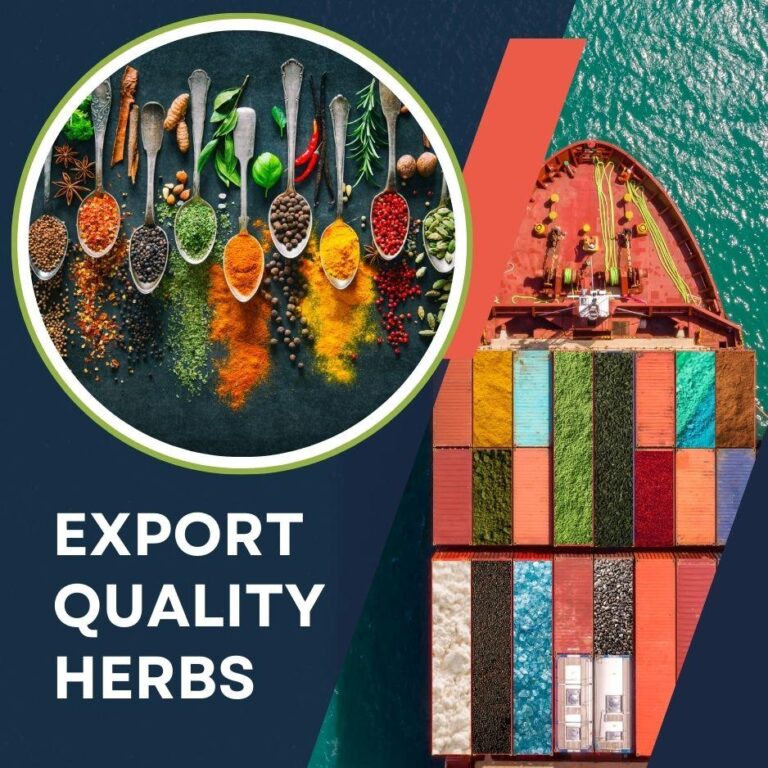
Creation Biotech supplies organic and natural agricultural ingredients and maintains a product portfolio that includes herbs, spices, grains and other botanical materials.
For B2B buyers, the sourcing process should begin by identifying the required herb and its intended application. The supplier and buyer can then establish product specifications, certification requirements, packaging preferences and order quantities before finalising a purchase.
For buyers evaluating Creation Biotech, the following information can help establish whether a product meets their procurement needs:
Product name and botanical identification.
Available grade, cut size and physical specifications.
Applicable organic certification and supporting documentation, if required.
Available laboratory reports and testing parameters.
Packaging options and minimum order quantity.
Sample availability, quotation and estimated dispatch timeline.
Export documentation and destination-specific compliance requirements.
This approach helps international procurement teams make informed purchasing decisions rather than relying on general product descriptions alone.
How to Select a Reliable Bulk Dried Herbs Exporter
Choosing a supplier requires a practical evaluation of product quality, documentation and commercial suitability.
Define your requirements. Identify the botanical species, plant part, grade, quantity and intended use.
Request a product specification sheet. Review the agreed quality parameters, including moisture, foreign matter, colour and relevant safety requirements.
Verify certifications. If organic ingredients are required, check the current certificate, product scope, operator details and eligibility for the destination market. Do not assume that every product offered by a supplier has the same certification.
Evaluate quality documentation. Request applicable certificates of analysis, microbiological results, pesticide residue reports or other testing records relevant to the product.
Confirm samples and packaging. Where available, assess a representative sample and confirm packaging suitable for the product and shipping conditions.
Agree on commercial terms. Confirm the price, order quantity, payment terms, shipment timeline, Incoterms and documentation before issuing the purchase order.
These steps help reduce sourcing uncertainty and support more consistent procurement.
Which Industries Buy Dried Herbs in Bulk?
Bulk dried herbs serve different commercial sectors depending on botanical type and quality grade.
Herbal tea and beverage manufacturers: Ingredients such as chamomile, hibiscus and rose petals.
Food processors: Suitable food-grade herbs and botanicals for approved formulations.
Cosmetic manufacturers: Selected botanicals for cosmetic formulations and personal-care products.
Herbal product companies: Plant materials that meet the buyer’s intended specifications and applicable regulations.
Botanical ingredient distributors: Bulk ingredients for onward supply to manufacturers and commercial customers.
Not every dried herb is suitable for every application. Buyers must confirm food-grade, cosmetic-grade or other applicable requirements before use.
Who is a dried herbs exporter in India?
A dried herbs exporter in India is a business that supplies dried botanical ingredients to overseas buyers and manages, directly or through its export partners, the documentation and logistics required for international shipments. Creation Biotech is an Indian supplier of dried herbs and other agricultural ingredients.
Can I buy dried herbs in bulk from India?
Yes. Bulk sourcing is available through suppliers that handle commercial quantities. Buyers should confirm the product, minimum order quantity, grade, packaging, sample availability and delivery terms directly with the supplier.
Which dried herbs are commonly sourced from India?
Commonly traded products include dried chamomile flowers, hibiscus petals, rose petals, moringa leaves, curry leaves and ashwagandha roots. Availability and specifications vary by supplier.
How can I verify an organic dried herbs supplier?
Request the current organic certificate and verify the issuing body, certificate validity, product scope and eligibility for the intended destination market. Also review the product’s traceability and applicable testing documents.
What information should I include when requesting a quotation?
Provide the product’s common and botanical names, required plant part, grade, quantity, destination country, packaging preference, certification requirements and intended application. This information helps the supplier prepare a more relevant quotation.
Partner with Creation Biotech for Dried Botanical Ingredients
Finding the right dried herbs exporter in India starts with clear specifications, transparent documentation and a supplier that understands B2B procurement requirements.
Creation Biotech offers a range of organic and natural agricultural ingredients for businesses evaluating Indian sourcing options. Whether you are a wholesaler, importer, herbal tea manufacturer or botanical ingredient distributor, share your product requirements to discuss availability, specifications, samples and bulk pricing.
Request a quotation from Creation Biotech: